

Movement is one of the most powerful and accessible ways we can support brain health. For individuals living with dementia or Alzheimer’s disease, regular physical activity can help support thinking skills, lift mood, and preserve independence for as long as possible.
At Grand Brook Memory Care, we believe staying active is about much more than fitness. It is about dignity, connection, and helping each person experience meaningful moments every day, no matter where they are on their journey.
Why Movement Matters
The idea is simple. Regular movement supports healthy blood flow to the brain, strengthens neural pathways, and may help slow cognitive decline. Even gentle, consistent activity can make a meaningful difference for someone living with memory loss.
Families often ask what type of exercise is safe or helpful at different stages of dementia. That uncertainty is completely understandable. The good news is that movement does not have to be complicated to be effective. With a thoughtful, supportive approach, staying active can feel comfortable, encouraging, and even joyful.

Brain Health, Physical Activity, and Alzheimer’s Disease
Brain health refers to our ability to think, remember, learn, and function in daily life. Physical activity plays a direct role in supporting all of these areas.
Organizations like the World Health Organization and leading medical experts consistently highlight the importance of physical activity as we age. Research shows that individuals who remain physically active have a lower risk of developing Alzheimer’s disease and other forms of dementia.
Activities such as walking, light aerobic exercise, or gentle strength training support cardiovascular health, improve circulation, and increase oxygen flow to the brain. These benefits help protect brain cells and support overall cognitive function.
For individuals already living with Alzheimer’s disease, movement still matters. Regular activity can help maintain strength and balance, support emotional well-being, and create a more positive daily rhythm.
Practical Movement Guidance by Stage of Dementia
As dementia progresses, the way a person stays active naturally changes. The goal at every stage is safe, simple, and meaningful movement that supports comfort, confidence, and connection.
Early Stage: Building Healthy Habits
In the early stages of memory loss, many individuals still enjoy routines and structured activities. This can be a wonderful time to gently build movement into daily life. The American Heart Association recommends about 150 minutes of moderate physical activity per week, which can be broken into short, manageable sessions throughout the day.
Helpful options may include:
- Daily walks in familiar surroundings
- Light household tasks like gardening or folding laundry
- Group activities that offer social connection
- Gentle dancing or movement to favorite music
- Activities that engage both the body and the mind, such as tossing a ball or counting steps
The focus during this stage is enjoyment and consistency, not intensity.
Middle Stage: Simplify and Support
As dementia advances, activities should become shorter, simpler, and more predictable. Too many steps or unfamiliar environments can feel overwhelming.
Supportive approaches include:
- Keeping movement sessions to 15–30 minutes
- Exercising in familiar rooms or hallways
- Chair-based exercises and gentle balance work
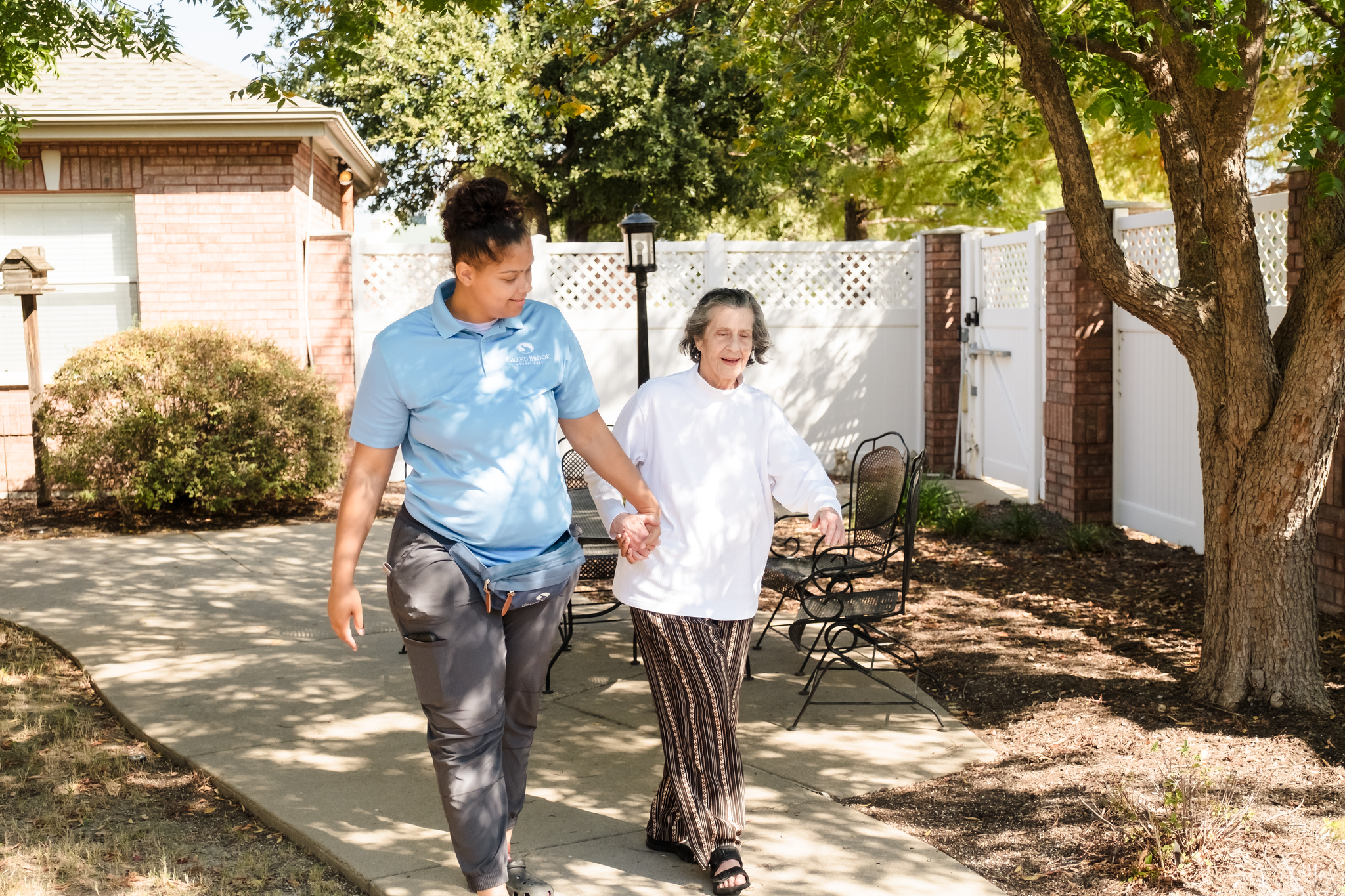
- Short, supported walks
- Light strength activities using resistance bands
- Everyday tasks that naturally encourage movement
Even small amounts of daily movement can help support circulation, mood, and a sense of independence.
Late Stage: Movement for Comfort and Connection
In the later stages of Alzheimer’s disease, movement becomes less about physical fitness and more about comfort, circulation, and human connection.
Gentle options may include:
- Light stretching or assisted range-of-motion exercises
- Supported standing or brief walks
- Simple hand or arm movements while seated
- Moving slowly to familiar, calming music
Music can be especially powerful at this stage. Familiar melodies often remain meaningful and comforting, even when words become harder to find. Here, movement supports dignity, calm, and connection.
Gentle Ways to Encourage Activity
Encouraging movement takes patience and compassion. Simple cues often work better than open-ended questions. Instead of asking, “Do you want to walk?” try saying, “It’s time for our walk.”
Connecting movement to lifelong interests can also help. A former gardener may enjoy light yard tasks. Someone who loved dancing may respond beautifully to music and gentle movement.
When family members join in, the activity often feels more natural and reassuring. Shared movement becomes shared time.

Creating a Safe Environment
Safety is essential when supporting physical activity:
- Keep walkways clear and free of trip hazards
- Use good lighting and visual contrast
- Add grab bars or railings where needed
- Seek professional guidance for balance or mobility concerns
Small changes in the environment can make staying active feel safer and more comfortable.
A Message from Grand Brook Memory Care
Every day at Grand Brook Memory Care, our teams support residents through safe, personalized movement programs. We see firsthand how regular activity can lift spirits, support engagement,
and create moments of connection.
No matter the stage of dementia, it is never too late to encourage gentle movement. Even a few minutes can make a meaningful difference in comfort, well-being, and quality of life. If you would like to learn more about how our communities support exercise, connection, and whole-person wellness, we welcome you to reach out to a Grand Brook Memory Care location near you.
We would be honored to walk alongside your family on this journey. Movement matters. And with the right support, your loved one can continue to experience comfort, connection, and purpose each day.